Jumat, 20 Maret 2020

HOTT 52 - Getting Ready

Kaptain Kobold over at the Stronghold blog has been holding forth on the game HOTT (Hordes of the Things) for years now. This year, they decided to play a weekly game of HOTT a year and record them as HOTT 52. This sounds like a great idea for me, and will allow me to get off my painting/modeling obsession (and Minecraft addiction -- you should see the "Empire" I'm creating in my world, all in Survival!) .. anyway, to actually play games.

(See [1] for what HOTT is, if you've never heard of it before.)

I'm going back in time, though, back to the last published version of HOTT, 1.2, which is now available again on Lulu! After playing a version of HOTT that was updated for the latest DBA 3 rules, I've decided to go back. Not because the update HOTT2DBA3 rules are bad, but because a lot of HOTT play at conventions/events is still based on 2.1. I wanted to re-familiarize myself with the actual version.

I was reading through my well worn copy of the rules and kept finding odd notations that implied I had done something earlier, so I went through my Google Drive and found this:

HOTT Reference Sheet (Google Drive Link)

The first page is written for my Etinerra campaign world, and I converted the measurements to inches because "'Murica", but the rules summary works very well as a one sheet/two page summary of the game.

Rather than try to do a huge big restart to my wargames campaign in Etinerra, I'm just going to play some games with miniatures and get to playing HOTT regularly, THEN I can see about tying things back to Etinerra. So this coming weekend, I will do two games to catch up with the weeks - last weekend was all about my playtest of Hommlet!

While I love Chaos Wars and still play it, HOTT is perfect for an hourlong game that gives me some fun, but doesn't require a lot of time.

Thanks, Kaptain Kobold, for the inspiration!

[1] HOTT/Hordes of the Things is a fantasy miniatures wargame that uses a small number of figures to play out just about any fantasy setting you can imagine. It also allows you to make just about any army you can imagine, with an army list that ranges from high Tolkein fantasy, to Asian Indian mythology, to Discworld and even Christmas Land! The rules can be interesting to interpret, with "Barkerese" on the same level as "High Gygaxian" in terms of writing. There's a ton of help on the web and my reference sheet to help you with the rules!

Storium Theory: Tell The Story Of The Characters

I've written in the past about the responsibility of the narrator to use the details provided by player characters, and to set up challenges for the player characters chosen for the game. Today, I'd like to delve into that same general idea, but from a slightly different angle.

As narrator, you're responsible for setting up the story. You're responsible for figuring out possibilities for the game arc - the way the game will start, how it will progress, what variations could come up along the way, how open things are to being altered by the player characters and by how much, and where the story is likely to go. I've written about these concepts quite a bit, as the responsibility the narrator holds for defining the game as a whole is pretty huge.

But don't forget that as narrator, your job is also to help the stories of the player characters - the main characters, the stars - emerge.

I wrote about this in brief a while back, when I discussed game arcs vs. character arcs - a story, ultimately, is not about what happens to the world at large, but what happens to the characters we are following. Therefore, the narrator's job is not just to define the world's plot, the game arc. The narrator's job is also - in fact, arguably more importantly - to help draw out character arcs and issues.

It is all well and good to have a grand, epic game plot, or events that will affect the fate of the world, or other things that will affect a great many people beyond the main characters. That's fine. In many genres, in fact, it's pretty darn essential.

And it's fine to have a structured story, plotted out to some degree in advance, with some events set reasonably in stone. Some narrators use looser setups with greater player influence, others use more defined ones with less player influence, and those are just a matter of the narrator's particular style. As I said in my discussion of said styles, they're all pretty much fine - it's just a matter of narrators and players who like similar styles finding each other.

So that's all fine.

But what's essential, no matter how you're running the game, is that the story needs to relate to the main characters. It needs to tie in with them. Not just involve them. Any story involves its main characters. What I'm encouraging you to do is more: Go beyond involving them. Go beyond just having them affect events in the story and be affected by them.

The story needs to be about them. It needs to relate to them. Even if there are events in the tale that would have happened without them, there need to be major, major elements of the tale that directly relate to the main characters.

Elements of the main characters' pasts should impact how the story develops. Who the main characters are should matter to the tale. Who they are should be tied intricately in.

Don't just set up events that would work with any group of characters. Look at the characters you have and design events, or at least twist events, to work specifically with them. The tale should never, ever feel like it would happen precisely the same way with another group of player characters. Sure, there can be certain broad strokes that could potentially come out regardless, but the intricate details of the story, the motivations and drama? That should all emerge from who these particular characters are.

And while the responsibility for that falls in part on the players - these are their characters, after all - it can't rest entirely on their shoulders. You, the narrator, must help them. You, the narrator, must make efforts to connect your tale to their tales.

I don't think I'm always successful at this, myself, but when I narrate a Storium game, I want the players to feel like it ended up tied in very strongly with their characters. I want them to feel like their characters' personal problems, issues, subplots, nemeses, and more all got involved. Even when the events start out not directly tied to them, I want them to end up tied in. I want the story to be the story of these characters, not the story of the situation.

That's the sort of mindset I encourage you to have.

Characters have their own subplots (they even have cards for those), their own issues, their own relationships, their own details. And these are not side elements to the story. These are the heart of the tale. These are what gives a tale meaning and drama and emotion.

Do not look at the individual character elements as the things to let players do when the main plot takes a break. Do not look at them as the things players can pull in if they want, so long as they don't get in the way of your primary tale. Do not look at them as "side" elements. Do not look at them as things to be covered "between" major threats.

These are not side elements. These are not less important. These are the very center of your story.

Some narrators plot out a lot in advance. Others take things as they come. Either is fine. But in either case, let the characters guide your story. You can plan events. But plan events around the issues raised by the main characters. Maybe you have things plotted out in advance. That's absolutely fine. But plot them out around the main characters.

There should never be a point in your tale where you say to yourself, "Well, this would be a good point to let the players go explore their personal plots, because I need a break between things for the main plot." That's because the personal plots and the overall plot should be interwoven sufficiently that pursuing the personal plots is pursuing the main plot, or vice versa.

If a player character has a villain in their background who kidnapped their brother, finding that person shouldn't be a side story. That person should be intricately tied to the main story, so that by pursuing the overall plot, the character plot is also explored, and by pursuing the kidnapper, the overall plot elements are revealed.

If a player character was accused of a crime they didn't commit, witnessed a foul deed, murdered a rival, sought approval from a parent, idolized a mentor...those are not things to leave on the sidelines or just explore when you have time. Those are things to tie into the tale. Those are things, in fact, to build the tale around as much as you can. The actual culprit is involved. The murdered rival had information that could've helped. The idolized mentor tried and failed to solve the problem...or maybe is involved in it.

Again, that doesn't mean you can't have an outline to start - having an outline to start is a great narration style. But the outline should be modified by the player characters. The story should fit their stories, and call to their themes.

Remember, you aren't just telling a story - you are telling the story of the characters. Don't build a generic story and then slot them in, or fit their tales into the breaks. Interweave the characters with the tale, and the tale with the characters, as much as you can manage.

Toy Soldiers, Part 2: Gaslands

Gaslands is another in Osprey Publishing's line of miniatures rule books that exist on their own, without a particular line of miniatures or accessories to go with them. In this case, the game is about post-apocalyptic vehicle combat, so naturally it is designed to be played with Matchbox cars.

The game uses a template-based system for movement (similar to X-Wing) and a rather ingenious way to simulate speed, with cars in higher gear getting to move more often in a turn. The rules are simple and straightforward, aided by an over-arching "rule of carnage" that states that if any rule is unclear or open to multiple interpretations, always go with the option that does the most damage.

The simple rules make it a fast-paced game, which is what you want from a game about speeding cars. Each round is split up into "gear phases" in which cars moving at that gear or higher get to move and then attack (either by ramming or shooting). Going faster gets your vehicle more chances to act, but it also reduces your choice of movement template, which could see your car unexpectedly careening into a bit of terrain, or even off the board all together.

Players are presented with a number of options for creating their cars, including different types of vehicles such as buggies, motorcycles, performance cars, pickup trucks, and even the dreaded War Rig. Cars are then festooned with armaments ranging from basic machine guns to land mines and oil slick sprayers. There is even one faction armed with mad science lighning projectors and EMP pulses, and another that uses jury-rigged catapults to lob bits of junk at their enemies.

While the game is undoubtedly a lot of fun to play, the real joy for most players is in customizing their toy cars, adding machine guns and rams along with dents, scratches, rust and weathering. An entire community has popped up on places like Etsy, providing accessories for players to stick to their toy cars, and in most Gaslands forums there is a lot more discussion about modeling the cars than there is about actually playing the game.

One of my criticisms of Ronin was the lack of accessories such as stat cards, but that's less of an issue with Gaslands, mainly because the game is a lot more popular and there are numerous online resources providing everything from plastic movement templates and custom engraved dice to reusable blank vehicle cards.

Rating: 5 (out of 5) A terrific high-octane vehicle combat game. It may take a bit of prep time if you want to create custom cars to play with, but that really is half the fun (at least).

Selasa, 17 Maret 2020

AAR: The Scarab Plague Of Mars!

   As usual, this AAR is short on photos because I was too busy playing to take pictures. However, I did grab a few of the setup. Game was played on 28 JUN 2019 in my gameroom with Zach, his son Nathaniel, and myself participating.

SCENARIO:

   Two rival companies of adventurers, the British Lord Curr's Incorrigibles and the German Empire's Society of Thule have traveled to Mars via aethership. Their goal: seize ancient Martian relics of occult power. Unfortunately, they were discovered and Martian priests have awakened a terrible curse: a massive swarm of flesh-eating scarabs. The scarabs will eat only Earthling flesh, though. So now, the two companies must flee for their lives. Safety lies on the canal running through the nearest village, Golah. The Earthlings want to get on the boats; the Martians want to stop them long enough for the scarabs to catch them and devour them all.

RULES AND FIGURES:

   The rules used were In Her Majesty's Name, my favorite for small skirmish Victorian Science Fiction. The figures are a mixture of North Star (the Society of Thule and Lord Curr's Incorrigibles), Parroom Station (The Masked One, Martian leader and mystic), and RAFM (High Martians, Shield Gunners, and Archers).

An overview of the battlefield.
The mat is from Cigar Box. First time used!

The Village of Golah
Buildings are Plastruct COLORed buildings for SAGA

Custom made canals, ordered a decade ago, only second time used in a game.
Boats are all scratchbuilt and older, too.

British Start point. The Society of Thule is on the other side of the ridge.
The small dots at table edge are the scarabs, advancing as a line.

A Martian Shield Gunner stands guard outside the canal master's office.

The Masked One, a Martian Mystic

High Martian warrior. Savage flying primitives.

   The two companies moved up as quickly as possible but got held up in and around the village. If the random rolls for the scarabs' advance hadn't been very low, all would have been devoured! As it is, the two European teams ganged up on the outgunned Martians and killed all but two of them (the Masked One, who used his Mystic powers to slow up the British advance, and one shield gunner, saved by his heavy armour).

   In the end, the British reached the boats first. Rather than allow the Germans to escape, the British took all of the boats. End result: British victory (44 points, almost all of his company escaped), followed by the Martians (28 points, all because of devoured Europeans) and then the Germans (19 points, for killing Martians). But we all had fun, and that was the main point after all.

   Notes for next time we run this scenario: 
  • Martians need more points to offset European gangup.
  • Scarabs need to move a flat d10", not d10-2. For four turns in a row, the scarabs did not move at all. This cuts the pressure on the Europeans to get moving!


Senin, 16 Maret 2020

The Hidebehind, Short Film, Review And Interview


The folklore of early loggers includes the tales of the Hidebehind, a creature that would take men when they weren't being careful in the woods. Parker Finn uses some great cut scenes to give his telling a sharp image of the creature that can disappear behind the trees.

I saw The Hidebehind at the 2019 FilmQuest film festival (website).The film was nominated for Best Makeup.

Here is a short horror about being lost in the woods. If you have never heard of the creature, The Hidebehind is a film you should watch to get the story for your next camping adventure for tales around the campfire.

Synopsis: Lost deep in the forest, a lone backpacker encounters a peculiar stranger.

Parker Finn gives a little more about the folklore that inspired his film. He also talks about what he is working on and what inspired him to become a filmmaker. Even after making this film he claims he still likes to be outdoors when possible.

What was the inspiration for The Hidebehind?

The film was inspired by a peculiar, little-known piece of North American superstition. Lumberjacks would occasionally get drunk and go missing in the forest, and their disappearances were blamed on something called a "Hidebehind," a sort of bogeyman that would stalk anyone unlucky enough to get lost in its neck of the woods. Supposedly a Hidebehind can hide itself behind any tree in the forest, no matter the shape or size. The story is that many people have heard a Hidebehind sneaking up on them, but no one has ever seen one—at least no one who's ever lived to tell the tale.

What project(s) do you have coming up you're excited about?

I'm currently in post-production on a new short horror film that is going to give people an absolute panic attack when they see it! Keep an eye out for it!

What was your early inspiration for pursuing a career in film?

I grew up obsessed with cinema. Movies were a big thing in my household growing up—we would rent movies every weekend. As a kid, I didn't fully grasp the idea that there was actually a person called a director who was making all the decisions we see on screen. The day I discovered what a director was, I knew right then and there: that's what I want to do.

What would be your dream project?

More than anything, I want to make a horror film that touches the zeitgeist—something that scares and sticks with audiences the way the original Nightmare on Elm Street, or The Ring did, that people will revisit again and again over the years.

What are some of your favorite pastimes when not working on a movie?

Getting outdoors! I love anything that comes with a rush of adrenaline: hiking, skiing, cliff jumping, bungee jumping.

What is one of your favorite movies and why?

Oh man, favorite movie? What day of the week is it? I suppose one film that always circulates around the top of my list is Stanley Kubrick's The Shining. Kubrick is one of my favorite filmmakers, and The Shining is damn near perfect, from the performances, to the cinematography, and especially the set design. I dream about getting to build sets like the interior of the Overlook Hotel.

You can find out more about The Hidebehind on IMDb (link).

You can also watch the trailer on Vimeo (link).

I'm working at keeping my material free of subscription charges by supplementing costs by being an Amazon Associate and having advertising appear. I earn a fee when people make purchases of qualified products from Amazon when they enter the site from a link on Guild Master Gaming and when people click on an ad. If you do either, thank you.

If you have a comment, suggestion, or critique please leave a comment here or send an email to guildmastergaming@gmail.com.

I have articles being published by others and you can find most of them on Guild Master Gaming on Facebookand Twitter(@GuildMstrGmng).


Jumat, 06 Maret 2020

Download Here They Lie For PS4

Download Here They Lie For PS4

PRELUDE | CUSA05344 | Update v1.03 | VR | HACKED


Platform: PlayStation 4
There's something truly terrifying about not having any idea where you are or what you're doing there and not even being able to trust your own eyes. In Here They Lie, part of the horror comes from not knowing if the world is messed up, or if it's just you. The starting area was the scariest for me because everything was so mysterious — as I moved through a train, shadowy figures appeared before me and then vanished. Showing the threat but not actually sending anything my way as I wandered (with smooth movement using the gamepad) through an unfamiliar, labyrinthine subway station was enough to make me tense up quite a bit.


DOWNLOAD

 PRELUDE - Here They Lie - DIRECT LINK


Password: After 10$ payment is done

[Hackaday] Debugging Electronics: To Know Why It Didn’t Work, First Find What It Is Actually Doing

Debugging Electronics: To Know Why It Didn’t Work, First Find What It Is Actually Doing

Download Dinosaurisland Compressed Version For PC

Download dinosaurisland Compressed version For PC

| DinosaurIsland [v1.0 +MULTi6 ] – RePack |


infoRequired System
OS: Windows 7✔
Processor: Intel i5 4590✔
Memory: 8 GB RAM✔
Graphics: NVIDIA GTX 970 / AMD 290✔
DirectX: Version 11✔
Storage: 15 GB available space✔
DOWNLOAD PARTS:

Password: After 10$ payment is done

Kamis, 05 Maret 2020

MT 5662, Tron Deadly Discs!

Happy New Year! The first episode of 2019 is all about Tron Deadly Discs, by M Network, a tiny little division of Mattel Electronics. Please stay tuned to the feed for an interview with programmer Jeff Ronne. I enjoyed talking with him and I hope that you will give it a listen. Next up will be Pengo by Atari. If you have any feedback for Pengo, please get it to me by the end of the day 20th January. You can send it to 2600gamebygame@gmail.com.Thank you all so much for listening!

Tron Deadly Discs on Random Terrain
Jeff Ronne on Quora
Takeover on Intellivision Lives
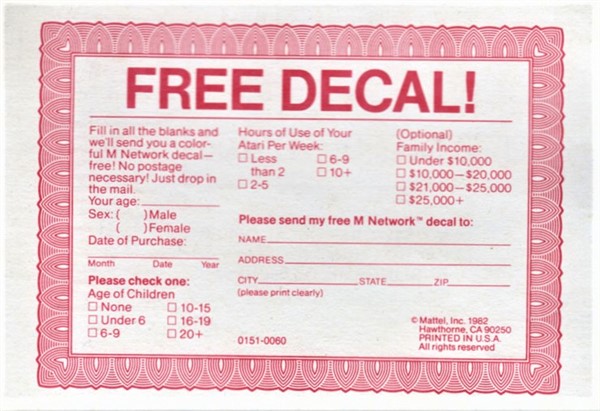
M Network decal card on Atarimania
Tron Deadly Discs on Intellivision Lives
Encom 2600 mod by Russ Caslis
Atari Bytes 153 - Mega Force the Movie!
Tron for 2600 Atari Age Thread
Only Solutions by Journey

Is The MBTI Pseudo-Science?

After finding out my personality type (and more specifically preferences in the way I perceive and judge things) and finding the MBTI/Jungian concepts of cognitive functions deadly accurate, Google searches into these systems of personalities led to many articles debunking and criticizing MBTI and Jungian personality types as pseudo-science. 

On the flip side, the Big Five Personality Traits are considered scientific and verifiable. 

Indeed, taking the MBTI online tests, my personality flitted between J and P, and even after learning about the Jungian cognitive functions, which is more reliable, I still couldn't tell what my personality type is. 

For instance, I really couldn't tell what my dominant function is, since we use it automatically without thinking. However, it was obvious to me (without having to take the test) that I prefer extroverted intuition for sure, meaning when I think about things I like to come up with tons of ideas, sometimes not necessarily connected. So I'm definitely Ne. As for the other functions of my personality type, introverted sensing and extroverted thinking, I couldn't tell. In fact, in medical school, I could see myself thinking that I was Te dominant since I was on point with the schedules, even exercising 5 times/week.

However, when I took the Big Five Personality Trait at multiple different online sites, the percentage may change by a mere 10% or so, but it was always consistent, leading to the empathic idealist profile. This made me chuckle, since the INFP sounds very much like the empathic idealist.

So is the MBTI and Jungian cognitive functions psuedo-science? 

As I'm not a scientist, I had to go back to the basics. Exactly what is science? Science is a systematic way of organizing empirical data, that can be tested and replicated, to explain and predict patterns of the universe.

The scientist comes up with an idea, and through experiments and collection of replicable data, if the large amount of data confirms the idea, time after time, this idea becomes a theory.

Science is highly esteemed because you can either prove or disprove a theory using the same experiments, over and over again. You can also critique whether the experiments being used are actually testing what you are evaluating. Finally, can the question that you're investigating be measured in the first place?

For instance, supposed I want to prove my idea that cats are superior beings, and because I want to make sure this idea is in fact true, I could "make up"an experiment that really doesn't test that idea, but may "sound" like it does.

In this example, we can say that superior beings don't follow instructions and "do their own thing" since they don't follow the herd. Therefore, my experiment collects data in calling my cat to come to me. They stare blankly at me 100% of the time. We then test that with millions of other cats, and it tends to be true 99% of the time with 5 billion collection points. 

There are the rare cats that do know their names and even so, they may or may not come to their owners (only when they want to), proving even more strongly that cats are "superior" because they do what they want to do, when they want to, on their own terms.

Per scientific methods, this is trash. One, you can't measure if something is in fact superior (i.e. what is superior? how do you measure that?), and the experiment, while easily replicable, doesn't really measure anything.

Using these criteria, the MBTI test itself isn't valid because your personality type constantly changes even when you take the same test twice - I took the official MBTI two times and then the online ones so many times to figure out if I were a J versus P as discussed here.

Even the official MBTI test is problematic. In the typing of Stephen Colbert, who tested as an INFP, you saw how his eyes lit up (which mine did as well) when the tester asked if he's more attracted to witty, creative, imaginative, incisive wit (this is supposed to be "N" or intuition), or if you find someone who can make others comfortable in practical ways ("S" or sensory):


As soon as I heard the second choice, I chose the "wrong" answer for my type. I'm infinitely more impressed by people who make sure that when you come into their homes, that you're warm and toasty, making your favorite cheese and fruit platter, and providing your favorite matching wine.

In fact, almost everyone would be more impressed by someone who is thoughtful and kind, over someone who is "just" a "smart ass". Of course, ideally, someone like my best friend Todd has both where he would combine various statements I would make and instantly come up with a joke, parody, imitation in unexpected surprising ways, but also makes sure that I'm cozy, comfortable and taken care of.

However, if you're forced to be in a relationship with someone who can only have 1 trait, 100% of people would chose the "S" option.

A better way of seeing if someone is an N or S is by asking if they think about things by considering open-ended possibilities (N), or seeing things in a structured, logical systematic manner (S). I'm very "N" so I'm not sure if I used the correct wording for "S" types and how they think.

Indeed, even the much-touted, "psychologist approved" Big Five Personality Traits, you can come up with your wrong personality type. You may notice that it's not "good" to be neurotic and irritable (even if you are) and then answer the questions where you get strongly "agreeable" when you should have scored the opposite, in the high neuroticism range.

In other words, it's hard to measure personality, because the person may second-guess, or may not know themselves very well, making personality inventory testing problematic. Even more highly tauted "psychologist approved" tests such as the MMPI (Minnesota Multiphasic Personality Inventory,  though that is used to screen mental disorders) can be problematic.

You can see how an extremely intelligent Narcissist or Antisocial person would answer such that they're healthy. Which is why psychologists use this as a screening tool, not as a diagnostic tool.

Perhaps the question should be, given all the problems of knowing yourself, or knowing yourself, but preferring the opposite since "opposites attract" leading to incorrect choices and wrong typing, the question should be this instead:

If you're in fact typed correctly, is the MBTI useful?  At least for me, it's extremely useful, because I can use my personality to accomplish what's most important to me, that's natural to who I am, without backlash.

When I try to solve things by being so fed up by my disorganization that I set up very rigid schedules and trying to organize my living space "to perfection", I end up being very critical of myself because I invariably fail and get overwhelmed.

Because of the failure and overwhelm, I get very grouchy and irritable, which leads to me becoming critical of others who aren't "pulling their weight" in terms of organizing and cleaning. Being critical and judgmental of others, as opposed to being accepting and open-minded, is one of the traits I hate the most about myself.

In MBTI/Jungian terms, this is my inferior Te function at work when I use it as my primary, ignoring my dominant and auxiliary functions that I use naturally (Fi and Ne). Forcing yourself to be something you're not almost always leads to disaster and/or is short-lived, because you can't be someone you're not.

On the flip side, if you find out that you're the opposite of me where you have extremely strong Te, using your Te dominant is the right thing to do, because you're good at it, and you use Te in a mature, healthy manner that's actually quite compelling and refreshing.

However, if I use my cognitive functions based on who I truly am, I tend to be very successful. For instance, when I was in a rut and every day's the same and there's a sense of dissatisfaction, I was able to come up with solutions.

One of my values (the jargon is Fi, introverted feeling at work) is to grow and be challenged, it makes sense to use my auxiliary Ne (extroverted intuition) to come up with possibilities and to think outside the box. I came up with Twitch streaming due to love of video games, and the extreme challenge of being entertaining (since I never had to use that skill), and wanting to create a warm, accepting community all fit my values (Fi) and what I found right to me based on my past experiences (Si).

Then, I use Te in the "right manner". Knowing that streaming fits my values and the challenge will jolt me out of the daily grind, I know I need a schedule, otherwise I would never stream. I set up a schedule, researched the in's and out's of streaming, finding practical ways to make streaming work for me.

The burn-out indeed came when I used my Te in the wrong way where I was results-oriented thinking about numbers. But renewed interest in streaming came about when I thought deeply about whether streaming is meaningful and fun. Does it make me happy, does it fit my values, and once I realize it has been helpful and rewarding, and ignore the number-driven results, I stopped being burned-out.

Another way in which knowing your personality type is seeing your blind-spots. I'm basically a slug, because I know myself very well. I know I'm 100% going to like something or not, so I close myself off to dreadful experiences such as going to frat parties, learning how to cook, learning how to garden, because I know 100% that these activities will lead to dread. 

However, using my auxiliary extroverted intuition (Ne) and being open to things, I force myself to do them because I see the value of experiencing these things, confirming what I already know, and using these experiences to laugh about with friends. 

As a complete introvert, I can go months without talking to my friends. This is a huge blind-spot and is definitely hurtful to others because they think, appropriately, that if you don't call them, you must hate them, don't value their friendship at all, and/or they did something wrong, even though that's far from the case. Strangely, I think about my friends all the time, but never call (talking on the phone makes me cringe), and I'm content to be alone for weeks on end.

As this causes clear problems in relationships, I use my inferior Te this week in fact, and actually set up a schedule to check my messages daily. I hate schedules, but this is meaningful to me, so it's been working. My daily activity list has things I want to do because they're meaningful to me and adds value to my life.

So I add things to that list such as making my bed. At night, I like the immediate gratification of crawling into sheet and blankets perfectly smoothed and evened out, distributing the warmth equally, as opposed to pulling the blankets on me, and ending up with clumps of warmth and cold spots. Since I highly value being comfortable, making my bed makes sense.

However, if you find that making your bed is a hassle, and you don't care about comfort, then do not make your bed, do not even waste your time thinking about it and feeling guilty about not doing so. In fact, there are scientific studies showing that making your bed may increase dust mites. Luckily, since I'm getting allergy shots, I've been making my bed so dust mites aren't going to cause problems.

Folding clothes adds no meaning to me, because it's just as easy to fish out the clothes I need, then spend hours folding. Further, the clothes are clean so it's not going to cause any sanitary problems if you don't fold. 

However, if you find organization truly soothes your soul and gives you peace of mind (clutter can be soul-sucking), and you love it when all your clothes are neatly hung up and in drawers, then by all means fold the laundry!

Washing dishes, vacuuming, steam mopping the floors, washing the bathrooms are a must for sanitary reasons.

Knowing who you are, and accepting who you are, you can find ways that lead to happiness, productivity and meaning. 

The MBTI/Jungian classification seems to be the one personality inventory that helped me figure this all out in a systematic, logical manner. As opposed to my having a hunch that being rigid doesn't work for me, but why not!, there must be something wrong with me, because it works for almost everyone else.

Indeed, American society operates this way, where being productive is to make sure you show up on time at work, follow the regimented schedule, and you find out if you're doing well if you get the results (this is very Te). So naturally, I think that if it works for the majority of Americans, it should work for me...but it never does.

Now knowing why using my Te (extroverted thinking) out of order is problematic, I know how to use my Te in the right order, thanks to understanding cognitive functions and stacking.

So it's very difficult to find your true MBTI type, unless you're very honest with yourself and insightful, but once you do, you see how it can be extremely helpful. But is it pseudo-science?

I'm not sure how to characterize the MBTI, except that at least for me (n=1), it's extremely accurate, and a very helpful therapeutic tool. Perhaps the MBTI is more philosophical in that it seeks to explain how you perceive and think about things. That doesn't mean that there's no truth and no value in MBTI. Just the opposite, it seems to be very accurate and honest. In fact, I found that the Taoist philosophy is in many ways more truthful than a lot of science. But, you can technically say that Taoism is a pseudo-science, because you can't really use experiments to prove if Taoism is scientific.

Everyone uses things that can't be proved by science, but nevertheless hold truths. Controversial topics such as people finding meaning and purpose in having faith and going to your place of worship for affirmation, love, support, interdependence, even though spiritual matters, can't be proved to be "correct" by science. And, controversy again, quite a few people find religion and spirituality "psuedo-science", which is the code, pejorative word for "bull-shit".

However, for a lot of people, having faith is not only extremely valuable but life-affirming, and leads to positive community building, lifting people out of depression, despair and despondency that can come from being disconnected.

Likewise, why throw MBTI out the window? For me at least, it's the personality system that not only makes the most sense to me, but also the most useful. I finally understand why I do the things I do in a systematic manner. As opposed to having a vague hunch about why I fail if I operate in the typical "American" results-driven way and berate myself as a result.

I can now leverage this concrete information to be a more productive and happy person, as opposed to using the cookie cutter method of "just be more organized" and "just do it" which would work for quite a lot of people, but not for me.

In fact, I was often critical of myself because of my procrastination and how I can't just plunge in and do the things that I need to do! Now I am better able to accept myself, and solve problems in a more cohesive and enduring manner.

Conclusion:
The question, "Is the MBTI Pseudo-science?" is the wrong question to ask. Rather, the question posed should be, "is it helpful?" If you manage to get consistent results even on the flawed online MBTI tests, knowing your cognitive function and stacking will help you to accept yourself, and find more cohesive and effective ways to solve problems based on how you operate.

The answer is yes, it has been helpful to me and many others, which is why MBTI still endures despite all the flack.

The How of Happiness Review